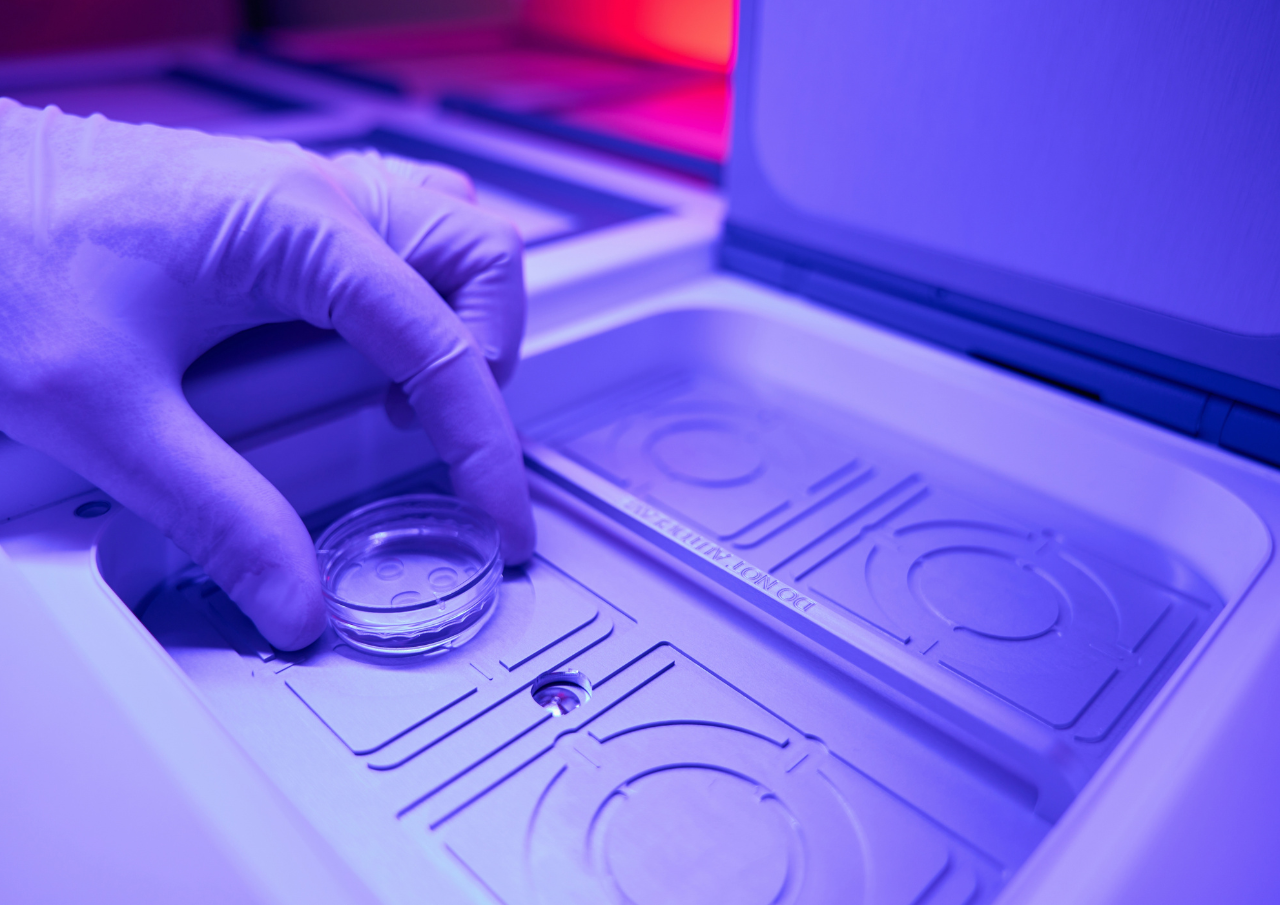

Embryo Freezing in Fairfax County, VA: What, Where, When, Why & How
Embryo freezing is one of the most powerful tools available in modern reproductive medicine.
It gives patients the ability to preserve fertilized eggs for future use, offering flexibility that a fresh transfer alone cannot provide.
Embryo freezing in Fairfax County, Virginia, is available to patients at every stage of their fertility journey, from those just starting IVF to those planning their second child years from now.
Understanding how this fertility treatment differs from egg freezing helps patients make better decisions about their own treatment plan.
What Embryo Freezing Actually Is
An embryo is a fertilized egg that has developed for three to five days in the lab. Freezing embryos preserves them at that stage for future use.
This differs from egg freezing, which stores unfertilized eggs before any sperm interaction. Embryos have already undergone fertilization, making them a more developed and stable biological unit.
Vitrification is the flash-freezing technique used to preserve embryos. It prevents ice crystal formation and maintains cell integrity through the freezing and thawing process.
How Embryo Freezing in Fairfax County Works
The process begins with ovarian stimulation, identical to the start of a standard IVF cycle. Eggs are retrieved once follicles reach maturity.
Retrieved eggs are fertilized with sperm in the lab using conventional IVF or ICSI. The resulting embryos are cultured for three to five days until they reach the blastocyst stage.
Those embryos are then vitrified and stored until the patient is ready to proceed with a transfer. Storage can safely continue for years without meaningful decline in embryo quality.
Why Embryo Freezing Differs From Egg Freezing
Embryos have a higher survival rate through the freeze and thaw process than unfertilized eggs. This makes them a more reliable option for patients who have a partner or are using donor sperm.
Preimplantation Genetic Testing, known as PGT-A, can only be performed on embryos rather than unfertilized eggs. Freezing embryos opens the door to chromosome screening before transfer, which can greatly improve success rates.
Patients who already have a sperm source and are ready to create embryos now will almost always benefit from embryo freezing over egg freezing alone.
When Freezing Embryos Makes the Most Clinical Sense
Embryo freezing in Fairfax County is commonly recommended when a patient produces more embryos than can be transferred in a single cycle. Freezing the remaining embryos preserves them for future attempts.
It also makes sense for patients undergoing genetic testing, since testing requires time and a frozen transfer cycle allows results to be received before proceeding.
Patients facing medical treatment that could affect fertility, such as chemotherapy, often freeze embryos as a preservation strategy before beginning that treatment.
The Frozen Embryo Transfer Process Explained
A frozen embryo transfer, or FET, begins with a cycle of hormone preparation. Estrogen is used to build the uterine lining to the optimal thickness for implantation.
Once the lining is ready, progesterone is added and the transfer is scheduled. The thawed embryo is placed into the uterus using a thin catheter in a brief outpatient procedure.
Most patients return to normal activity the same day. A pregnancy test is typically performed 10 to 14 days after transfer.
Success Rates and What the Research Shows
Frozen embryo transfers now rival and in some cases exceed fresh transfer success rates. The uterine environment in a frozen cycle is often more receptive because it has not been exposed to high levels of stimulation medications.
Blastocyst-stage embryos, meaning those cultured to day five, show higher implantation rates than earlier-stage embryos. Most clinics now culture to day five before freezing when embryo quality allows.
Age at the time of egg retrieval remains the most significant predictor of success. Embryos created from younger eggs consistently produce stronger outcomes regardless of when the transfer occurs.
Start Your Family Building Journey Today at Annandale Fertility With Embryo Freezing in Fairfax County
Annandale Fertility offers embryo freezing in Fairfax County with state-of-the-art lab technology and personalized care at every step.
Call 703-462-8665 to speak with an experienced member of our team or you can now request an appointment online and find out whether embryo freezing is the right next step for you.